$85.00Original price was: $85.00.$68.00Current price is: $68.00.
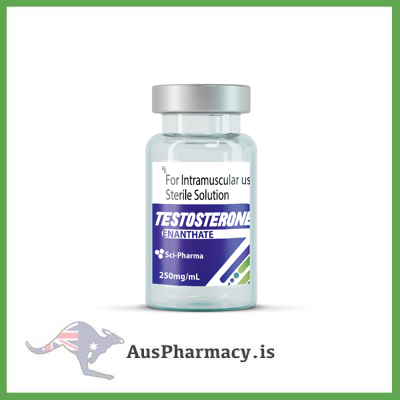
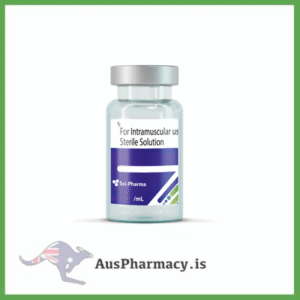
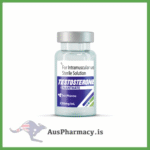
Sci-Pharma Testosterone Enanthate 250mg (10ml)
Testosterone Enanthate is one of the most commonly used testosterones for the treatment of low testosterone. It is also extremely popular in performance enhancing circles. This is one of the most affordable anabolic steroids on the market, it’s highly versatile, tolerated well by most all adult men and its supply is through the roof.
Testosterone Enanthate is an anabolic steroid that is perfect for all levels of use. This is the perfect anabolic steroid for the first time steroid user and will be equally effective for the individual with a lot of time in the saddle.
Derivative- Testosterone
Aromitization- Yes
Half Life- 1-3 days
Recommended Administration- Every day or every second day
Recommended Dosage-
TRT – 125mg a week (split into 2 dosages every 3.5 days)
Cycle – 500mg a week (split into 2 dosages every 3.5 days)
Explore the science of Sci-Pharma Testosterone Enanthate 250 mg. Learn its chemical structure, endocrine relevance, and role as an academic model for hormone chemistry and pharmacokinetics in pharmaceutical education.
Testosterone Enanthate is one of the most commonly used testosterones for the treatment of low testosterone. It is also extremely popular in performance enhancing circles. This is one of the most affordable anabolic steroids on the market, it’s highly versatile, tolerated well by most all adult men and its supply is through the roof.
Testosterone Enanthate is an anabolic steroid that is perfect for all levels of use. This is the perfect anabolic steroid for the first time steroid user and will be equally effective for the individual with a lot of time in the saddle.
Sci-Pharma Testosterone Enanthate 250mg
Derivative- Testosterone
Aromitization- Yes
Half Life- 1-3 days
Recommended Administration- Every day or every second day
Recommended Dosage-
TRT – 125mg a week (split into 2 dosages every 3.5 days)
Cycle – 500mg a week (split into 2 dosages every 3.5 days)
Testosterone Enanthate 250 mg/ml by Sci-Pharma is widely used in pharmaceutical and biomedical education to illustrate hormone synthesis, receptor binding, and ester-based delivery systems. It provides a clear demonstration of how chemical modification of natural hormones influences biological duration, distribution, and pharmacodynamics—topics vital for students of pharmacology, endocrinology, and medicinal chemistry.
Testosterone Enanthate is created by esterifying the hydroxyl group of testosterone with enanthic acid, forming a lipid-soluble compound that demonstrates how esterification extends hormone release—a core educational principle in drug design.
3. Educational Significance of Testosterone Esters
In academic programs, testosterone esters help explain:
The role of chemical modification in drug release rate
Lipophilicity and absorption correlations
Depot mechanisms in pharmacokinetics
How esters enable controlled delivery and extended half-life
Students analyzing structure–activity relationships (SAR) learn that small structural changes can dramatically influence duration and bioavailability.
4. Mechanism of Action
When studied in biological systems, Testosterone Enanthate is hydrolyzed enzymatically to free testosterone. Free testosterone then binds to androgen receptors, forming a hormone-receptor complex that translocates to the cell nucleus, where it:
Binds to specific DNA regions (androgen response elements)
Stimulates gene transcription of proteins responsible for cell growth and differentiation
Regulates physiological processes involving muscle, bone, and reproductive tissues
This mechanism provides an ideal framework for teaching signal transduction and molecular endocrinology.
5. Pharmacokinetic Concepts for Education
Testosterone Enanthate serves as a teaching model for:
Ester absorption rate differences
Distribution in lipid versus aqueous environments
Metabolic conversion by hepatic enzymes
Excretion pathways of metabolites
By comparing Enanthate to other esters (e.g., Propionate or Cypionate), students learn how carbon-chain length affects release kinetics and half-life—Enanthate typically providing a medium-long duration profile.
6. Androgen Receptor Biology
The androgen receptor (AR) is a nuclear receptor that controls gene expression linked to cell growth and repair. In educational demonstrations, Testosterone Enanthate illustrates:
Ligand-receptor binding affinity
Receptor activation and translocation
Regulation of mRNA synthesis
Feedback loops in the hypothalamic–pituitary–gonadal axis
This knowledge helps learners understand how endocrine balance is maintained at a molecular level.
7. Endocrine Feedback Mechanisms
The study of Testosterone Enanthate also teaches how negative feedback regulates hormone levels:
Elevated testosterone signals the hypothalamus to reduce GnRH (gonadotropin-releasing hormone)
The pituitary then lowers LH and FSH secretion
Hormone production decreases to maintain homeostasis
These cycles are crucial to understanding neuroendocrine communication.
8. Comparative Educational Analysis
Ester Type
Approx. Release Time
Half-Life
Educational Focus
Propionate
Fast (1–2 days)
~2 days
Short-acting ester model
Enanthate
Moderate (5–10 days)
~7 days
Depot kinetics and release profile
Cypionate
Slow (8–12 days)
~8 days
Long-acting design principles
Such comparative tables help learners visualize pharmacokinetic engineering through ester variation.
9. Structure–Activity Relationship (SAR)
Key molecular points taught in medicinal chemistry:
The 17-β hydroxyl group is the site of ester attachment.
The enanthate chain increases lipid solubility, delaying absorption.
Removal of the ester via hydrolysis restores biologically active testosterone.
This shows how chemical design dictates biological timing.
10. Laboratory Applications
In educational laboratories, Sci-Pharma Testosterone Enanthate 250 mg can be used to demonstrate:
Spectral analysis (NMR and IR identification of esters)
Chromatographic separation and quantification
Hydrolysis rate experiments in enzyme solutions
Simulation of pharmacokinetic curves using computational models
These practical activities help students bridge theory and application.
11. Educational Relevance in Pharmacology and Endocrinology
Testosterone Enanthate is used to explain:
Hormone receptor specificity
Anabolic and androgenic effects in cell systems
Metabolic pathways of steroid hormones
Feedback control loops within the endocrine network
This makes it a cornerstone compound in endocrine pharmacology education.
12. Ethical and Laboratory Guidelines
Educational use of Testosterone Enanthate must always follow:
Institutional ethics and chemical safety protocols
Local and international research standards
Supervision within authorized laboratories
These guidelines emphasize responsible academic practice.
13. Historical and Scientific Context
Introduced in the 1950s, Testosterone Enanthate was developed to improve the duration of testosterone’s physiological action. In education, its history illustrates:
The progress from natural hormones to synthetic analogs
The impact of ester chemistry on drug delivery
The importance of structure-guided innovation in pharmacology
Students can trace how scientific advances shape therapeutic understanding.
14. Integration into Academic Curricula
Testosterone Enanthate is an educational reference in:
Medicinal Chemistry: esterification and SAR
Endocrinology: androgen function and feedback
Pharmacokinetics: drug release and half-life
Physiology: hormonal signaling and tissue response
Its multidisciplinary relevance makes it ideal for interdepartmental study modules.
15. Conclusion
Sci-Pharma Testosterone Enanthate 250 mg provides a powerful educational tool for understanding the complex interactions between chemical design and biological function. Through the study of this compound, students grasp how pharmacokinetic engineering, receptor binding, and hormone feedback govern the principles of modern endocrine pharmacology.
By linking molecular structure to systemic effect, Testosterone Enanthate illustrates how rational drug design meets biological regulation in the educational realm of pharmaceutical sciences.
 Skip to content